Is Piano Hard to Learn? An Honest Answer
Is piano hard to learn? It's one of the most common questions people ask before deciding whether to start — and the honest answer is more nuanced than a simple yes or no.
Here's what I can tell you after more than 40 years of teaching piano: compared to most other instruments, piano is actually one of the more accessible instruments to begin learning. The first steps are genuinely achievable for almost anyone. The deeper levels of mastery — like any worthwhile skill — take sustained effort. But the gap between "complete beginner" and "playing real music you're proud of" is considerably shorter on piano than most people expect.
Let me explain why.
Why Piano Is Easier to Start Than Most Instruments
Think about what it takes to get a sound out of a violin. Before you can play a single recognizable note, you need to learn how to hold the bow, how to draw it across the string at the right angle and pressure, and how to place your fingers on an unfretted neck with no visual guide to where the notes are. The instrument actively resists beginners. The first weeks on violin are, for most people, a genuinely discouraging experience.
Guitar is more forgiving, but still presents significant early barriers. Chord shapes require awkward hand positions. Pressing steel strings onto frets causes real finger pain until calluses develop. And again, the relationship between finger positions and musical notes is not immediately visible — it has to be memorized.
Brass and woodwind instruments present their own version of the same problem. On a trumpet or flute, producing a clean tone at all requires specific embouchure technique that takes weeks to develop. The notes are not visible. The physical setup is the first obstacle.
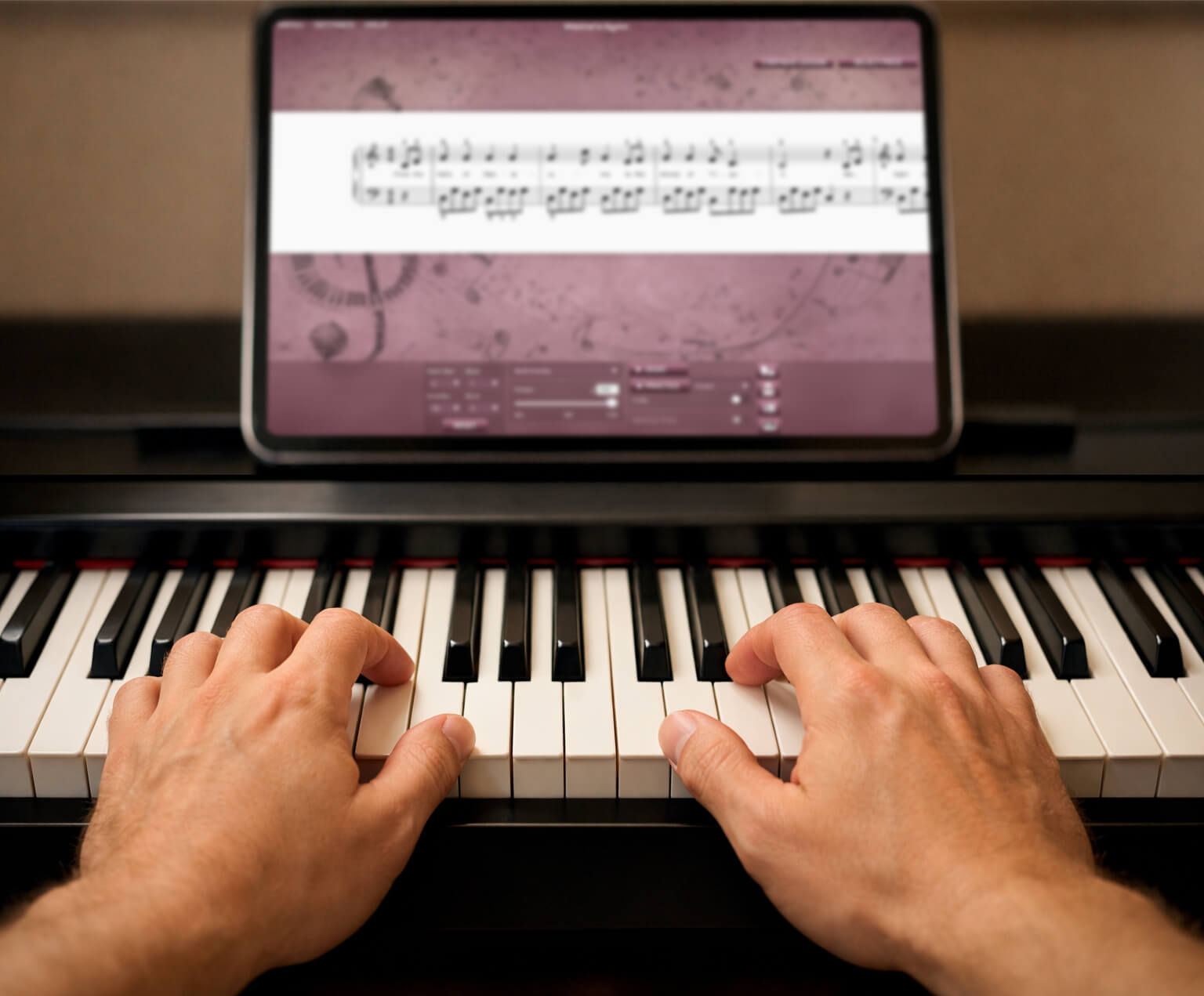
Piano is fundamentally different. The notes are laid out in front of you in a clear, logical sequence — low on the left, high on the right, the same pattern repeating across the entire keyboard. One key produces one note. There is no ambiguity, no hidden relationship to memorize before you can begin.
This visual accessibility has a remarkable consequence: even young children who have never had a lesson will, if given access to a piano, spontaneously begin picking out tunes they know by ear. They can hear that they're getting warmer or colder and adjust accordingly. This kind of intuitive self-discovery simply doesn't happen on a violin, a guitar, a trumpet, or a flute. The piano invites exploration in a way that no other common instrument does.
For an adult beginner, this accessibility is even more valuable. You can orient yourself on the keyboard immediately. The visual layout gives you a map. And from the very first lesson, you are playing actual notes — not just learning how to hold the instrument.
The One Real Challenge — And Why It's Manageable
It would be dishonest to say piano presents no challenges. It does — and being clear about them upfront is more useful than false reassurance.
The genuinely hard thing about piano is two-hand independence. Each hand plays different notes, often in different rhythms, simultaneously. In the early stages of learning, this feels almost impossible — your brain wants to treat both hands as a single unit, and separating them into two independent streams of movement requires real cognitive effort.
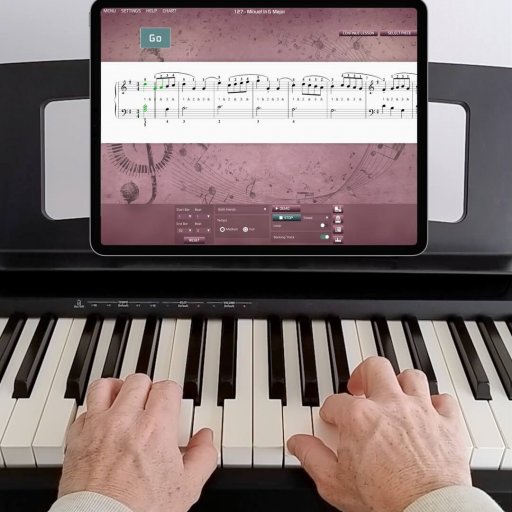
This challenge is real, and it doesn't disappear immediately. But it is solvable — and with the right method, it becomes manageable much faster than most beginners expect. The standard approach is to learn each hand separately until it's comfortable, then combine them gradually. Musiah's AI piano teacher guides you through exactly this process, with real-time feedback at every step so you always know what to work on next.
It's also worth understanding why two-hand independence is harder on piano than on most other instruments. Piano is uniquely capable of sustaining multiple independent melodic voices simultaneously — a single pianist can bring to life what would otherwise require several musicians. Think of a Bach Fugue: four completely independent voices, each with its own melody, rhythm, and phrasing, all produced by two hands on one instrument. No other solo instrument comes close to this. The two-hand independence challenge on piano is real precisely because piano's musical capability is extraordinary — you are training your hands to do something genuinely remarkable.
Why Piano Gets a Reputation for Being Difficult
In my experience, most adults who tried to learn piano and gave up didn't stop because piano is inherently too hard. They stopped because of how they were learning — not because of the instrument itself.
The most common culprit is unsupported practice. With traditional lessons, a teacher is present for one hour per week. The other 167 hours, students practice alone — without anyone to catch mistakes before they become ingrained habits, without feedback on whether what they're doing is right or wrong. Over time, this unsupported practice produces frustration rather than progress. The student concludes they're "not musical" when the real problem was the absence of guidance.
A second common issue is the absence of a structured, sequential method. Jumping between YouTube tutorials, trying to learn favourite songs before the foundations are secure, or working through a random collection of pieces without a clear progression — all of these make piano feel harder than it needs to be. Progress stalls not because the student lacks ability, but because the learning environment lacks structure.
Both of these problems are what Musiah's perpetual lesson environment is specifically designed to solve. Every practice session includes real-time corrective feedback from an AI teacher — the unsupported gap disappears entirely. And the 13-level structured syllabus ensures every piece builds on the last, so progress is consistent and measurable.
How Quickly Can an Adult Realistically Learn Piano?
The traditional answer is years — and with traditional lessons, that's often accurate. A full piano syllabus to advanced-intermediate level typically takes around six years of weekly lessons.
But that timeline assumes a traditional learning environment: one lesson per week, unsupported practice in between, and gradual progression through a conventional course. Change the environment, and the timeline changes dramatically.
Musiah students typically complete the equivalent of that six-year syllabus in 18 to 26 weeks of consistent daily practice — you can see the data. Michael Ortiz, age 13, became the first student to complete the full course online in just 18 weeks. Ali H., an adult student from Ann Arbor, Michigan, completed it in 10 weeks — one of the fastest adult completions on record.
These are exceptional results. Most students take longer, and that's completely fine. The point is that the question "how hard is piano to learn?" is inseparable from the question "how are you learning it?" The instrument hasn't changed. The method makes all the difference.
For a full breakdown of realistic timelines, see our guide to how long it takes to learn piano.
Thanks for reading,
Brendan Hogan L.Mus.A., A.Mus.A.
Piano Teacher & Musiah Inventor
Frequently Asked Questions
The questions people ask most often about how hard piano is to learn:
Q: Is piano hard to learn as an adult?
No harder than for anyone else — and in some respects easier. Adults bring focus, motivation, and the ability to understand musical concepts quickly. The main challenge for adult beginners is two-hand independence, which requires real cognitive effort but becomes manageable with a structured method and consistent daily practice. For more on the adult learning experience, see our guide to learning piano as an adult.
Q: Is piano easier to learn than guitar?
For most beginners, yes — at least in the early stages. Piano has a clear visual layout where one key produces one note, with no ambiguity. Guitar requires memorizing chord shapes, dealing with finger pain from pressing steel strings, and learning a less immediately visual system. Most people can play recognizable notes on a piano within their first session; guitar typically takes longer before anything sounds musical.
Q: Is piano easier to learn than violin?
Significantly easier to start. Violin requires learning bow technique and precise finger placement on an unfretted neck — both of which take weeks to develop before you can produce a clean note. Piano produces a clear tone the moment you press a key, making the early stages far more rewarding and less frustrating.
Q: How long does it take to learn piano?
With traditional lessons, a full syllabus to advanced-intermediate level typically takes around six years. With Musiah's AI piano teacher and consistent daily practice, students typically complete the same syllabus in 18 to 26 weeks. The timeline depends heavily on practice consistency and the learning method. See the full breakdown in our guide to how long it takes to learn piano.
Q: What is the hardest part of learning piano?
Two-hand independence — training each hand to play different notes in different rhythms simultaneously. This is genuinely challenging in the early stages and requires real cognitive effort. The most effective approach is to learn each hand separately until comfortable, then combine them gradually under guided instruction. Musiah's AI teacher walks you through this process with real-time corrective feedback at every step.
Q: Can I teach myself piano without a teacher?
Yes — with the right method. The most common reason self-teaching fails is the absence of real-time corrective feedback: mistakes go uncorrected and become ingrained habits. With a true AI piano teacher present at every practice session, you get the same corrective guidance a human teacher provides, without the scheduling constraints or cost. For a full guide, see our article on how to teach yourself piano.
Ready to Find Out for Yourself?
Start your free 14-day trial and discover how much you can achieve with the right method behind you.
Adult Beginners
A full 13-level curriculum built for adults — structured, fast, and genuinely taught by AI.
Start Adult LessonsKids (Ages 7+)
An epic musical adventure that turns real piano skills into a quest your child will actually want to practice.
Start Kids LessonsAlready Play?
Import your own scores and get note-level AI feedback to master complex repertoire faster.
Explore Practice Tools