Can Seniors Learn Piano? Real Stories, Real Results
Is it too late to learn piano in your 60s, 70s, or beyond? It's one of the most common questions older adults ask before starting — and one of the most persistently misunderstood. The concern is understandable: stiff fingers, the worry that the brain "can't learn new tricks," a lifetime of other priorities that got in the way. But the evidence from Musiah students tells a very different story.
This page shares that evidence directly — real students, real ages, real challenges overcome. Not as inspiration-for-inspiration's-sake, but as honest answers to the questions seniors actually ask before they begin.

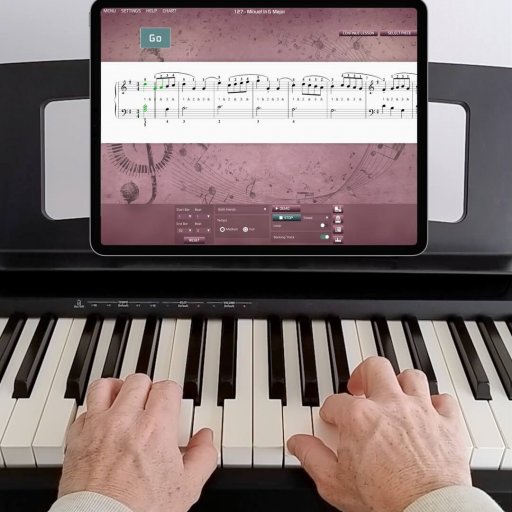
Bev Barton, 78 — 130 songs in 15 months, carpal tunnel and all.
Four Students Who Answered the Question Themselves
The most honest answer to "can seniors learn piano?" isn't an argument — it's the people who've done it. Here are four Musiah students whose stories cover the range of ages, starting points, and concerns that most seniors bring to this question.
Bev Barton, 78 — Carpal Tunnel and All
Bev Barton from Burnside, Victoria started learning piano at 78 with no prior musical background. What makes her achievement exceptional is that she did it with carpal tunnel syndrome, working through rhythmically challenging pieces that many younger students find difficult.
When Musiah inventor Brendan Hogan called to congratulate her on completing Level 9, Bev's response was characteristically matter-of-fact: yes, the syncopated pieces were a struggle sometimes — but she gets there. Bev went on to progress through 130 songs across all 13 levels within 15 months of starting, before continuing her musical journey independently, applying the skills she had built to pieces of her own choosing.
Lorraine H., Approaching 70 — Overcoming Stiff Fingers
Lorraine H. from Western Australia had always wanted to play piano. She bought an instrument and tried to teach herself through YouTube. Her verdict: "What a disaster." When she found Musiah, things changed — though not immediately easily. Her fingers were stiff, the early lessons were hard work, and the auditions at the end of each piece brought on what she describes as nervous sweats.
She passed Level 1 anyway. Her partner noticed the improvement in her technique. And her summary to other seniors considering the same step: "Have a go — it's good fun and it has given me a great sense of achievement." As for the stiff fingers that worried her at the start: "Now I'm finding it much easier." Read Lorraine's full review.
Jenny S., 60 — A 50-Year Dream, Finally Within Reach
Jenny S. from Tasmania first touched a piano at age seven. Over the next five decades, life intervened repeatedly — a cracked piano frame, lessons abandoned, three different teachers tried and left behind. On her 60th birthday, her husband bought her a beautiful upright piano. She tried to teach herself. Then she found Musiah.
What struck Jenny most wasn't the technology — it was the absence of judgment. No nervousness before lessons. No embarrassment about pace. No pressure to have practiced enough before showing up. "Musiah does not discriminate about age," she wrote. "I have confidence and enjoy the lessons and help is there 24 hours a day." She is now recommending the program to everyone she knows. Read Jenny's full review.
Edward F., 65 — "An Exceptionally Unexceptional Learner"
Edward F. from Texas describes himself, with deliberate modesty, as "a very peculiar, particular and exceptionally unexceptional type of learner." He had completed music workbooks, attempted and abandoned private lessons, and watched more internet theory presentations than he could count. Nothing worked. Then he found Musiah — and within his first session experienced what he calls "a tremendous feeling of satisfaction" playing with both hands for the first time.
His conclusion, after years of failed attempts elsewhere: "I truly believe Musiah, or something very close to it, will become a standardised approach for the future of learning." That's a significant endorsement from someone who came to it as a self-described difficult case. Read Edward's full review.
The Specific Concerns Seniors Raise Most Often
Bev, Lorraine, Jenny, and Edward each arrived with different worries. Most seniors considering piano for the first time share a version of at least one of the following concerns — and each has a direct, evidence-based answer.
Stiff or Uncooperative Fingers
This is the most commonly cited physical concern, and Lorraine's experience addresses it directly. Finger stiffness in older adults is real — but it tends to improve with regular, structured practice rather than worsen. Musiah's approach of returning to each piece until it's genuinely mastered (rather than moving on before consolidation) means the repetition that loosens finger movement is built into the method, not left to the student to self-manage. Adrienne N., a 60-year-old student from Queensland, put it memorably: "As we age our brains know what to do but it sometimes takes a little time to convince parts of the body — the fingers. They aren't as co-operative as they used to be." Her solution was persistence. It worked.
Whether the Brain Can Still Learn
The neuroscience here is unambiguous: the adult brain retains neuroplasticity — the capacity to form new neural connections — throughout life. Learning a musical instrument is among the most effective activities for maintaining and strengthening that capacity. A 2014 twin study by Balbag, Pedersen and Gatz, published in the International Journal of Alzheimer's Disease, found that adults who played a musical instrument were 64% less likely to develop dementia or cognitive impairment than those who did not. The brain doesn't stop learning — and piano lessons may actively protect it.
The practical experience of Musiah students bears this out. Edward F., after decades of failed attempts with other methods, succeeded at 65 not because his brain had improved — but because the teaching method finally matched how his brain needed to receive information.
Past Failed Attempts
Jenny's story is the clearest answer here: five decades of trying, three teachers, two abandoned instruments, and she succeeded at 60. The variable that changed wasn't her age or her aptitude — it was the method. A teaching approach that works at your pace, doesn't judge, and provides structured feedback 24 hours a day removes most of the reasons adults give up.
Feeling Out of Place or "Too Old"
The AI piano teacher model removes this concern entirely. There is no classroom, no cohort of younger students, no teacher whose time you feel you're wasting if you need to repeat a piece. Musiah students set their own pace. The software doesn't have an opinion about how long you take — only whether you've genuinely mastered the current piece before moving on.
What to Expect as a Senior Beginner
Realistic expectations matter more than optimistic ones. Here is an honest picture of what senior students typically experience with Musiah.
Progress is real but not always linear. Most seniors take a little longer through the early levels than younger adult beginners — not because the material is harder for them, but because consolidating new motor skills takes more repetition as we age. That's not a barrier; it's just the reality of how practice works. Musiah's mastery-gating structure — which requires genuine competence before advancing — is actually well-suited to this: it prevents the accumulation of bad habits that would slow progress later.
Physical challenges like stiff fingers or conditions such as arthritis or carpal tunnel syndrome (as in Bev's case) don't necessarily prevent progress. They may slow it in specific pieces — syncopated rhythms and fast passages tend to be the hardest — but students working through these challenges consistently report that the structured repetition Musiah provides helps over time.
The judgment-free environment matters more than most new students expect. Many seniors who've had difficult experiences with human teachers — feeling rushed, embarrassed, or like a burden on someone else's time — describe a qualitative shift when learning with an AI piano teacher that has infinite patience and no agenda beyond your progress.
For a fuller picture of what Musiah senior students have achieved, the reviews by mature-age students are worth reading in their own right — the range of starting points and outcomes there is broader than any single article can capture.
Frequently Asked Questions
The questions seniors ask most often before starting:
Q: Is 70 too old to learn piano?
No — and Musiah has students in their 70s and 80s to prove it. Bev Barton progressed through 130 songs across all 13 levels within 15 months of starting at age 78 — with carpal tunnel syndrome. The brain retains the capacity to learn new skills throughout life. The key variable is method, not age: a structured, judgment-free approach that works at your pace removes most of the barriers that cause older adults to give up.
Q: Can seniors learn piano if their fingers are stiff?
Yes, in most cases. Finger stiffness improves with regular, structured practice — it's one of the reasons consistent daily practice matters more for older students than for younger ones. Musiah's approach of mastering each piece before advancing builds in the repetition that develops finger dexterity gradually. Students with conditions like carpal tunnel syndrome and arthritis have made real progress through Musiah, though pace varies by individual.
Q: How long will it take a senior to learn piano?
This depends significantly on how much time you practice each day and what physical challenges, if any, you're working around. Most senior Musiah students progress more slowly than younger adults through the early levels, but the endpoint — completing the full 13-level syllabus to advanced-intermediate level — is achievable. Bev Barton completed almost the entire course within 15 months of starting at age 78. For a full breakdown of typical timelines, see the how long does it take to learn piano article.
Q: Is piano good for seniors' mental health and brain health?
The research supports it strongly. A 2014 twin study published in the International Journal of Alzheimer's Disease found that adults who played a musical instrument were 64% less likely to develop dementia or cognitive impairment. Beyond the neurological research, Musiah students consistently report improved mood, a sense of achievement, and the satisfaction of pursuing a long-held goal. The cognitive engagement of learning piano — reading notation, coordinating both hands, developing timing — is one of the most active forms of brain exercise available.
Q: I've tried to learn piano before and given up. Is it worth trying again?
Almost certainly, if the method changes. Jenny S. tried to learn for 50 years — three teachers, two pianos, decades of false starts — and succeeded at 60 with Musiah. Edward F. had completed workbooks, attended private lessons, and watched hours of online theory before finding an approach that finally worked at 65. In both cases, the obstacle wasn't aptitude or age — it was a method that didn't suit how they needed to learn. Musiah's structured, feedback-driven, self-paced approach removes most of the friction that causes adults to give up.
Q: Where can I read more reviews from senior piano students?
Musiah has a dedicated collection of reviews by mature-age students covering a wide range of ages, starting points, and experiences. The range of stories there gives a more complete picture than any single article can provide.
Ready to Start Your Own Journey?
The same tools Bev, Lorraine, Jenny, and Edward used are available to you — with a free 14-day trial, no commitment required.
Adult Beginners
A full 13-level curriculum built for the adult brain — structured, fast, and genuinely taught by AI.
Start Adult LessonsKids (Ages 7+)
An epic musical adventure that turns real piano skills into a quest your child will actually want to practice.
Start Kids LessonsAlready Play?
Import your own scores and get note-level AI feedback to master complex repertoire faster.
Explore Practice Tools