Can You Teach Yourself Piano? Yes — Here's How to Do It Properly
Can you really teach yourself piano without a human teacher? Many traditional piano teachers will tell you no — that without someone sitting beside you, correcting your mistakes in real time, you'll develop bad habits and plateau quickly. As a piano teacher of more than 40 years, my view is different. All teaching is ultimately self-teaching. The question isn't whether you can learn without a teacher — it's whether you have the right conditions to do so effectively.
Most self-teaching attempts fail. But the reason is almost never talent or age. It's method.
Why Most Self-Teaching Attempts Fail
The typical self-teaching path looks like this: find some YouTube tutorials, work through a few songs by watching and copying, feel good about initial progress — and then plateau. After a few months, motivation fades. The student gives up, concluding they're "not musical" or "too old to learn."
The problem isn't the student. It's the absence of corrective feedback.
When you practice without someone — or something — telling you what you're doing wrong, mistakes become habits. A note played with the wrong finger, a timing error that's slightly off, a duration held too short — these errors feel invisible when you're the only one listening. But they accumulate. And by the time you notice that something isn't right, the habit is already ingrained and much harder to correct.
This is why students who come to Musiah after months or years of self-teaching through YouTube or apps often have to spend time un-learning before they can progress. The issue isn't their ability — it's that no one was there to catch the errors before they became automatic.
A human teacher solves this problem. But a human teacher costs $30–$100 per hour, requires a fixed weekly appointment, and is only present for one hour out of 168 in any given week. The other 167 hours, you're on your own — which means the problem of unsupported practice is only partially solved even with traditional lessons.
What Successful Self-Teaching Actually Requires
Effective self-teaching doesn't mean practicing in isolation. It means having the right feedback mechanism present every time you sit down at the keyboard. Without that, you're not really teaching yourself — you're guessing, and hoping the guesses are right.
The conditions that make self-teaching succeed are the same conditions a good human teacher provides:
Real-Time Corrective Feedback
Every time you play a wrong note, a timing error, or hold a note for the wrong duration, something needs to catch it immediately — before you move on and reinforce the mistake. This is the single most important condition for effective piano learning. Without it, practice is as likely to cement bad habits as to build good ones.
Structured Sequential Progression
Effective self-teaching requires a clear path from where you are to where you want to be, with each step building on the last. A random collection of YouTube tutorials or a large song library is not a curriculum. Real progress comes from a structured syllabus where each piece introduces specific skills that prepare you for the next.
Mastery Before Advancement
One of the most damaging habits in self-teaching is moving on before you've genuinely learned the current piece. It feels like progress — more songs completed — but the gaps accumulate. A good teacher holds the line: you don't advance until you've actually mastered what's in front of you. Without that standard, self-teaching tends to produce students who have "done" many pieces but can reliably play none of them.
The Perpetual Lesson
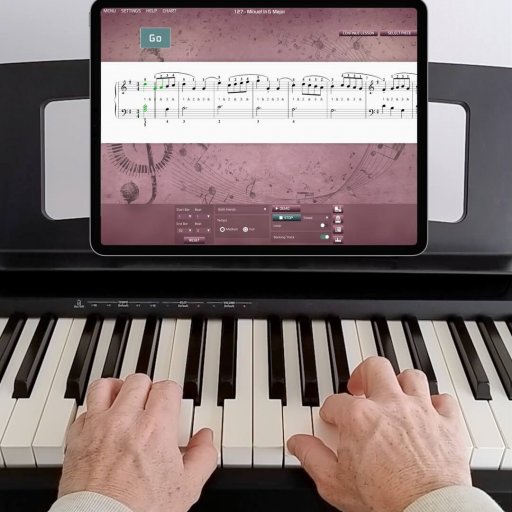
The ideal self-teaching environment is what I call a perpetual lesson — a guided learning environment where every practice session is also a lesson, because your teacher is there with you every time you sit down. This is what Musiah's AI piano teacher provides: not a tool that watches you play, but a teacher that actively responds to how you play, guiding you through corrections the same way a human teacher sitting beside you would.
The Practice Principles That Make the Difference
Even with the right feedback mechanism in place, how you practice matters enormously. These are the principles that consistently separate students who make rapid progress from those who plateau.
The Matrix vs. Musical Reality
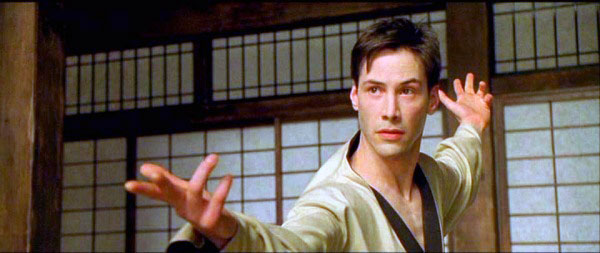
In the Matrix films, Neo plugs a program into his head and instantly knows kung fu. Human learning doesn't work that way. Knowledge needs time to settle — to move from conscious effort to unconscious competence. Think of Tai Chi masters who practice extraordinarily slowly, so they can eventually move with incredible speed. The same principle applies to piano.
The slower you practice, the quicker you learn. This sounds counterintuitive, but it's one of the most reliable findings in music pedagogy. Practicing slowly gives your brain the time it needs to register each note, each finger movement, each timing relationship accurately. When you practice fast before you're ready, you're practicing the mistakes as well as the correct notes — and the mistakes stick just as readily.
When you encounter a difficult passage, resist the urge to push through at tempo. Slow it down until you can play it cleanly. Then increase the tempo gradually. This approach takes more patience in the short term and produces dramatically better results over time.
Consistency Over Duration
Twenty to thirty minutes of focused daily practice produces better results than a two-hour session once a week. Daily practice keeps the material fresh in both your muscle memory and your conscious recall. It also prevents the "re-learning" problem where you spend the first ten minutes of each session recovering what you lost since last time.
Target Your Weak Sections
Most students always start from the beginning of a piece. The result is that the opening bars become very polished while the difficult middle section remains weak — because by the time you reach it, you're mentally tired. Instead, find the hardest passage in the piece and work on that first, when your focus is sharpest. Work backwards from the end if necessary, so each section gets the attention it actually needs.
Hands Separately Before Together
When learning a new piece, work each hand separately until it's comfortable before combining them. Trying to coordinate both hands before either is secure doubles the cognitive load and slows progress. A practical method: take a segment of one to two bars, play the left hand five times until comfortable, then the right hand five times, then both hands together five times — before moving to the next segment.
How Musiah Makes Self-Teaching Work
Musiah was built specifically to solve the feedback problem that makes most self-teaching fail. It is not a video tutorial, a falling-notes game, or a song library. It is a genuine AI piano teacher — a sophisticated expert system that reasons about your performance the way a human teacher does, and responds to it accordingly.
When you play, Musiah assesses every note for pitch, timing, and duration. It identifies which errors are most important to address, prioritises them the way a skilled teacher would, and guides you through a correction process — speaking to you, breaking down the problem, and directing you through exercises until you've genuinely resolved it. This happens every time you practice, not once a week.
The result is that students who use Musiah as their self-teaching method can complete the equivalent of a 5–6 year traditional piano syllabus in 18 to 26 weeks — you can see the data. Not because Musiah accelerates learning artificially, but because it eliminates the wasted time that unsupported practice produces: the mistakes that go uncorrected, the bad habits that need un-learning, the weeks spent re-covering material that wasn't properly consolidated.
Self-teaching, done properly, is one of the most empowering things an adult can do. Musiah makes it possible to do it properly.
Thanks for reading,
Brendan Hogan L.Mus.A., A.Mus.A.
Piano Teacher & Musiah Inventor
Frequently Asked Questions
The questions adults ask most often about teaching themselves piano:
Q: Can you really teach yourself piano as an adult?
Yes — but the method matters enormously. Self-teaching through books or YouTube tutorials fails most adults not because of talent or age, but because there's no real-time feedback to catch mistakes before they become habits. With a structured method that provides genuine corrective feedback at every practice session, adults consistently achieve real results. Musiah students typically complete a full 13-level syllabus — the equivalent of 5–6 years of traditional lessons — in 18 to 26 weeks.
Q: How long does it take to teach yourself piano?
With an unguided approach, progress is unpredictable and often stalls. With a structured, feedback-driven method, the timeline is much more predictable. Most Musiah students complete the full course in 18 to 26 weeks of consistent daily practice. For a full breakdown of the timeline, see how long does it take to learn piano.
Q: What is the best way to teach yourself piano?
The most effective approach combines three things: a structured sequential syllabus (not a random collection of tutorials), real-time corrective feedback at every practice session, and a mastery standard that prevents you from advancing before you've genuinely learned each piece. A true AI piano teacher provides all three. Generic apps, YouTube tutorials, and falling-notes games provide none of them.
Q: How much should I practice when teaching myself piano?
Twenty to thirty minutes of focused daily practice is the most effective routine for most adult beginners. Consistency matters more than duration — daily short sessions produce better results than occasional long ones. As you progress and the pieces become more demanding, your practice time will naturally increase. The key is making practice a daily habit rather than an occasional event.
Q: Do I need to learn to read music to teach myself piano?
Learning to read sheet music is one of the most valuable skills you can develop as a pianist — it's what allows you to learn any new piece independently, without relying on tutorials or apps to show you the notes. Musiah teaches standard music notation from your very first lesson, integrating it into the practical lessons so that reading ability develops naturally alongside playing ability, without lengthy theory lectures.
Q: What equipment do I need to teach myself piano at home?
A MIDI keyboard connected to a device running the Musiah app is all you need to get started. You don't need an acoustic piano. See our equipment page for guidance on choosing the right keyboard and checking compatibility with your device.
Ready to Teach Yourself Piano — Properly?
Choose the path that fits your starting point and begin with a free 14-day trial.
Adult Beginners
A full 13-level curriculum built adults — structured, fast, and genuinely taught by AI.
Start Adult LessonsKids (Ages 7+)
An epic musical adventure that turns real piano skills into a quest your child will actually want to practice.
Start Kids LessonsAlready Play?
Import your own scores and get note-level AI feedback to master complex repertoire faster.
Explore Practice Tools