Why Piano Practice Feels Hard (And How a Perpetual Lesson Fixes It)
Why does piano practice feel so much harder than piano lessons? Many articles have been written theorising about why piano students allegedly hate practice. But the real answer is simpler than most people think — and it has nothing to do with laziness or lack of motivation.
It's about support. Or rather, the absence of it.
The Real Reason Practice Feels Hard
First, let's dispel a minor myth: it is absolutely untrue that all students hate piano practice — no one hates practice all the time. What is true is that all students, regardless of age, go through various phases. There are times when piano practice lifts your spirit like few other things in this world. There are times when it feels anywhere from slightly enjoyable to very enjoyable. And then there are times when you feel like giving up.
To some extent, this is the nature of any worthwhile long-term endeavour. The rewards far outweigh the effort of persisting through those occasional difficult periods. And the more advanced you become, the greater the percentage of your practice time you will spend enjoying the fulfilling, even transcendental, aspects of playing piano.
But one challenge affects virtually every student — especially those still developing the ability to work independently. During traditional piano practice, there is no support.
When you practice alone, there is no one beside you to guide and encourage you — to witness your successes, to help you break down seemingly insurmountable problems into small manageable pieces, or to tell you when you're practicing a mistake before it becomes a habit. By contrast, in a traditional piano lesson, your teacher is there beside you. You may be challenged, but you have the reassurance of knowing you won't get totally lost.
This is largely why most students enjoy their lessons but struggle with practice. The lesson feels productive and guided. Practice feels uncertain and unsupported.
The Hidden Cost of Unsupported Practice
One of the main downsides to traditional piano lessons is that a teacher can only be with you once a week. The other 167 hours, you are left to your own devices — practicing alone, without knowing whether what you're doing is right or wrong.
I recently came across a website promoting traditional lessons that made this claim: "Regardless of the amount of practice you do, if you commit to your weekly piano lesson, you will keep getting better."
In other words: don't bother practicing — just keep paying for lessons and you'll improve anyway. Unfortunately, nothing could be further from the truth.
In a traditional lesson scenario, practice is at least as important as the lessons themselves. Without regular practice between lessons, each session becomes a repetition of the previous week's material rather than an advancement of it. Both teacher and student gradually sink into frustration. Progress stalls. And eventually, many students give up — not because they lacked talent, but because the unsupported practice environment became too discouraging to sustain.
The solution is not simply "practice more." The solution is to change the nature of practice itself.
The Perpetual Lesson: A Better Environment for Learning Piano
What if every time you sat down to practice, your teacher was there with you?
That's the idea behind what I call a perpetual lesson — a guided learning environment in which lesson time and practice time become one. Every session at the keyboard is simultaneously a practice session and a lesson, because your teacher is present, responding to your playing in real time.
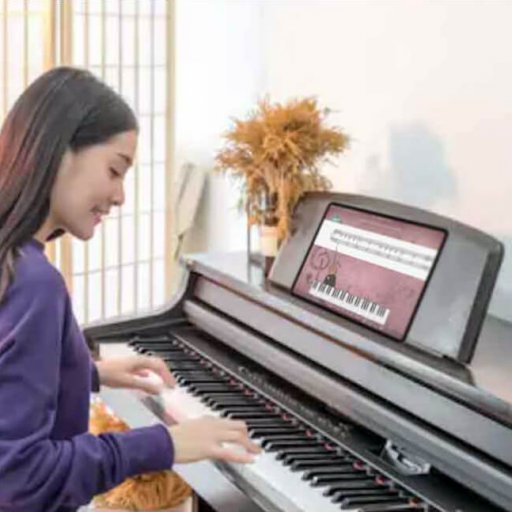
This is exactly what Musiah provides. As the world's first AI piano teacher, Musiah is with you every time you sit down at the keyboard — not as a passive recording or a video tutorial, but as an active teacher that listens to how you play, identifies what needs correcting, and guides you through the correction process. There is no unsupported gap. There is no practicing in the dark.
This is a large part of why students taking Musiah's beginner piano lessons for adults — and kids — achieve results that traditional lesson students rarely match. With the support and guidance of their teacher at all times, students of all ages make consistent, measurable progress.
On a side note: for families with young children, I recommend that at least one parent also learns the first one or two levels of the Musiah course alongside their child. By doing this, you set a powerful example — one that shows children the value you place on learning. And many kids love to be able to say they are more advanced than their parents, which can be a surprisingly effective motivator.
What the Perpetual Lesson Makes Possible
With advances in technology, opportunities for self-improvement and self-learning have never been more abundant. The perpetual lesson environment that Musiah provides places every student — adult or child, complete beginner or restart student — in the best possible position to achieve their goal of learning to play piano in the most enjoyable, cost-efficient, and effective way.
Students who experience the perpetual lesson environment consistently describe a qualitative shift: practice no longer feels like an obligation to be endured between lessons. It becomes something they look forward to — because every session moves them forward, and they always know exactly what to work on next.
Whether you are considering piano lessons for yourself or for your children, the difference between a guided perpetual lesson environment and traditional unsupported practice is not a small one. It is often the difference between succeeding and giving up.
Thanks for reading,
Brendan Hogan L.Mus.A., A.Mus.A.
Piano Teacher & Musiah Inventor
Frequently Asked Questions
The questions students ask most often about piano practice and the perpetual lesson:
Q: Why is piano practice so much harder than piano lessons?
Because lessons are supported and practice traditionally isn't. In a lesson, your teacher is present — guiding you, catching mistakes, keeping you on track. In traditional unsupported practice, you're on your own, often without knowing whether what you're doing is correct. The perpetual lesson environment Musiah provides eliminates this gap entirely: every practice session is also a lesson, because your AI piano teacher is present and responding in real time.
Q: How much should I practice piano?
For most beginners, 20 to 30 minutes of focused daily practice produces better results than occasional longer sessions. Consistency matters more than duration. As you advance and the pieces become more demanding, your practice time will naturally increase. The key is making it a daily habit rather than an event — and having the right support so that the time you do spend practicing is genuinely productive.
Q: Can I learn piano effectively by practicing on my own?
Yes — if your practice is guided. Unguided practice (working through YouTube tutorials or practicing without feedback) is where most self-teaching attempts fail. With a true AI piano teacher present at every session, you get the same corrective support a human teacher provides, without the scheduling constraints or cost. For a full guide to effective self-teaching, see our article on how to teach yourself piano.
Q: What is a perpetual piano lesson?
A perpetual lesson is a learning environment in which every practice session is simultaneously a lesson — because your teacher is present and active every time you sit down at the keyboard. Musiah's AI piano teacher makes this possible: it listens to your playing, identifies errors, prioritises which issues matter most, and guides you through corrections in real time. The unsupported practice gap that causes most traditional students to stall simply doesn't exist in a perpetual lesson environment.
Q: How does Musiah differ from just practicing with a piano app?
Most piano apps provide note detection and visual cues — they show you which notes to press but don't reason about your performance. Musiah is a genuine AI Expert System that assesses pitch, timing, and note duration on every note, identifies patterns in your errors, and guides you through a structured correction process. For a detailed comparison, see our guide to what makes the best piano learning app.
Experience the Perpetual Lesson for Yourself
Start your free 14-day trial and discover what learning piano feels like when your teacher is always there.
Adult Beginners
A full 13-level curriculum built for adults — structured, fast, and genuinely taught by AI.
Start Adult LessonsKids (Ages 7+)
An epic musical adventure that turns real piano skills into a quest your child will actually want to practice.
Start Kids LessonsAlready Play?
Import your own scores and get note-level AI feedback to master complex repertoire faster.
Explore Practice Tools